
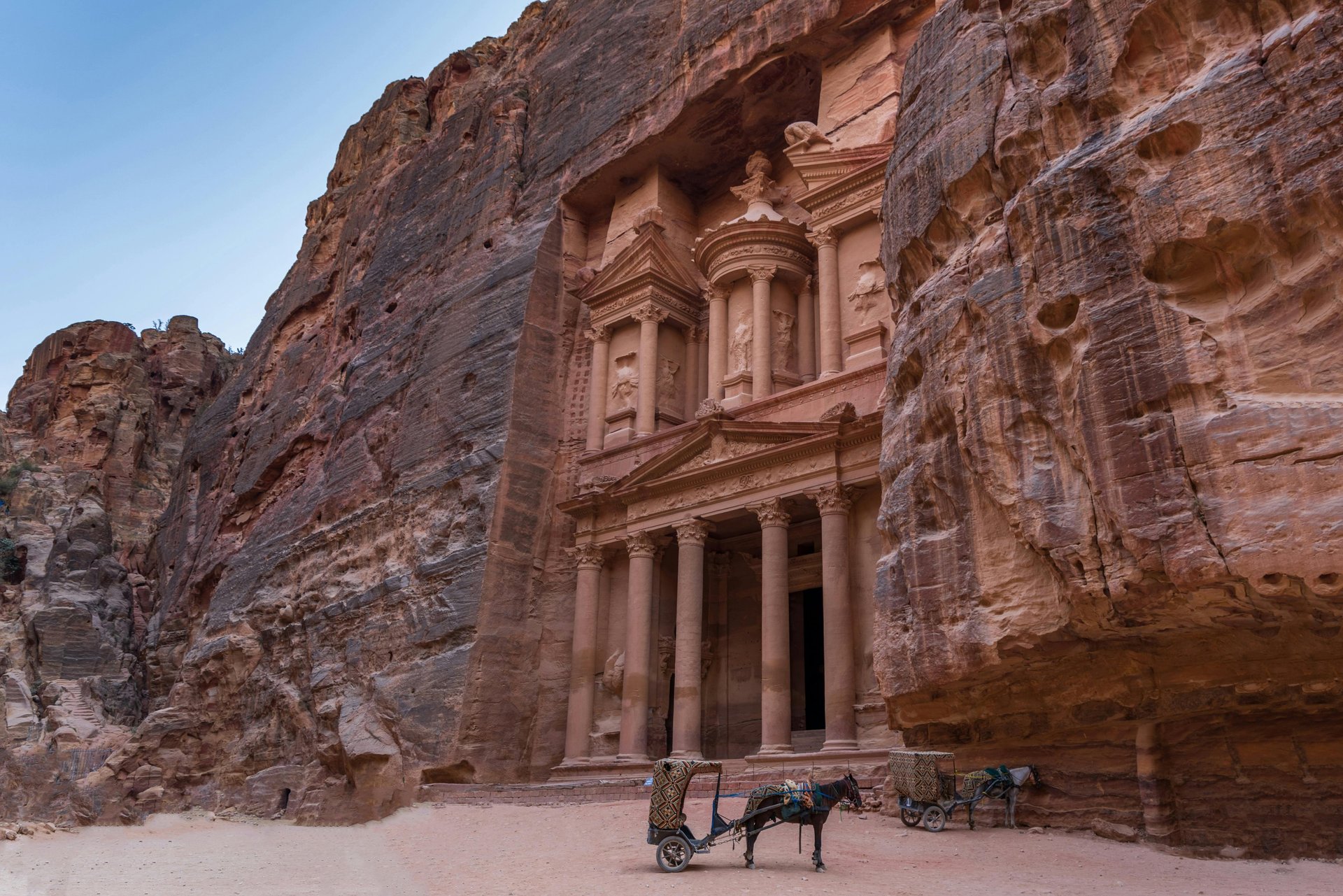
Travel to Jordan: Complete Guide (Visa, Safety, Costs & Tips 2026)
Introduction
Planning a trip to Jordan for the first time can feel confusing — visas, safety, costs, weather, and how to actually move around the country.
Jordan is actually very straightforward once you understand a few key things: entry rules, how the Jordan Pass works, when to visit, and how to plan your route.
We’ve been living in Jordan and exploring it for years — from Petra and Wadi Rum to the Dead Sea and the north — and this guide is based on real experience, not copied information.
If you’re visiting Jordan for the first time, this is everything you need to know to plan your trip properly, avoid common mistakes, and travel with confidence.
Is Jordan safe for tourists?
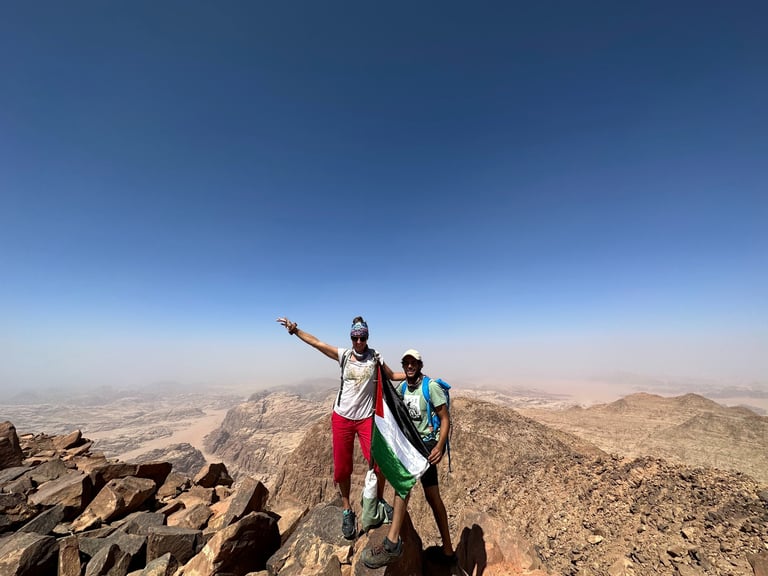
Jordan is one of the safest countries in the Middle East for tourists. Major destinations like Petra, Wadi Rum, the Dead Sea, and Amman operate normally.
The main concern for travelers is not crime, but regional perception due to nearby conflicts. On the ground, daily life continues as usual.
From our experience:
We’ve traveled across Jordan multiple times, including remote areas, and never felt unsafe. Locals are welcoming, helpful, and often go out of their way to assist tourists.
👉 If you want a detailed breakdown, read our 2026 full guide on safety in Jordan.
Flights to Jordan (Airports & Best Booking Tips)
For most travelers, entering Jordan by air is the easiest option. The good news is that you do not need to overcomplicate it — you just need to choose the airport that matches your itinerary and book smart.
Jordan has two main international airports for travelers: Queen Alia International Airport (AMM), the country’s main gateway, and King Hussein International Airport (AQJ) in Aqaba. Queen Alia is located south of Amman and is the main arrival point for most visitors, while Aqaba can be useful for south-focused itineraries.
Main airports in Jordan
1) Amman – Queen Alia International Airport (AMM)
This is the main hub and the best option for most visitors. It usually offers the widest choice of airlines, more stable schedules, and the easiest access to Amman, Madaba, the Dead Sea, and routes heading south toward Petra and Wadi Rum. It is also the airport most first-time visitors should look at first. Queen Alia is around 35 km south of Amman rather than inside the city, which can actually be an advantage if you are renting a car and want to avoid driving through central Amman immediately after landing.
2) Aqaba – King Hussein International Airport (AQJ)
Aqaba is useful if your trip is focused mainly on the south, especially Aqaba, Wadi Rum, and Petra. It can save time and reduce backtracking, but flights are usually more limited and can be more seasonal compared with Amman. That makes it a good strategic option for some itineraries, but not automatically the best one.
Which airport should you choose?
Choose AMM (Amman) if you are doing a classic first-time Jordan itinerary or want the most flexibility.
Choose AQJ (Aqaba) if you are short on time and want to start in the south immediately.
A good route in some cases is to fly into one airport and out of the other, for example arriving in Amman and departing from Aqaba, or the other way around. This can work very well for one-way road trips, but only if the route makes practical sense and does not create extra transport costs that cancel out the flight savings.
How to find cheaper flights to Jordan:
Be flexible with dates
Shifting your flight by even one or two days can reduce the price noticeably, especially on routes from the UK and Europe. This is one of the simplest ways to save money and it often works better than obsessing over airline loyalty or booking tricks.
Check both airports
Do not search only for Amman. In some cases, Aqaba can be cheaper, and in others the best option is to arrive in one city and leave from the other. Always compare the total route, not just the flight price on its own.
Use budget airlines carefully
Budget airlines such as Ryanair and Wizz Air can offer very good value on Jordan routes when available, but they are also the first to adjust schedules, reduce frequency, or pause routes during disruptions. Because of that, it is smarter not to build a tight, non-refundable itinerary around a budget flight too early.
Do not stack non-refundable bookings too early
This matters more than most people think. If your flight is with a budget airline or your route is not operating daily, avoid locking yourself into non-refundable hotels, tours, or transfers until your flight situation is solid.
Buying tickets: what usually works best
Be flexible with dates and airports
Look for the cheapest available travel dates first, then build your Jordan itinerary around them where possible. This gives you more control over the total cost of the trip and can sometimes change the best starting point for your route.
Book in advance if you are traveling on a budget
For budget-conscious travelers, last-minute flights to Jordan are often a bad idea. Booking earlier usually gives you better prices and better flight times. As a general rule, it is smarter to start checking well in advance and book once you see a good fare rather than wait and hope for a miracle.
Our real experience
Here is a strategy we use ourselves. When we are in Poland in May and plan to fly back to Jordan in late August, we monitor prices across the second half of August instead of focusing on one fixed day. Then we choose the cheapest option that still fits our plans. This simple approach has saved us a lot of money over time.
We have also seen the same pattern with family members from Karolina’s side visiting us in Jordan. In their experience, booking around two months in advance often gives a very good balance between price, availability, and smoother travel planning.
Best Time to Visit Jordan (Weather & Seasons):
What Is the Weather Like in Jordan?
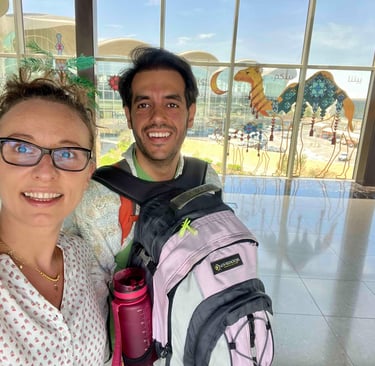
One of the things Karolina and I love most about Jordan’s weather is how dramatically it can change within such a short drive. In winter, when it’s cold in Amman where we live, we often get in the car and head to the Dead Sea or a nearby canyon, where it is usually around 10–13°C warmer.
In less than an hour, we can trade jackets and grey skies for sunshine and real warmth.
Jordan has hot summers and cold winters, but the weather varies a lot depending on where you are. Amman and the highlands can feel surprisingly cold in winter, while places like Aqaba, the Dead Sea, and the Jordan Valley stay much warmer.
How We Choose Where to Travel in Jordan Depending on the Season:
Because we live in Jordan all year round, we have naturally built our own routine of visiting different places depending on the season and the weather.
In spring, especially from March to late April, we love heading north like Ajloun for hikes. This is when the area is at its best — green, fresh, full of water springs, and perfect for long days outdoors.
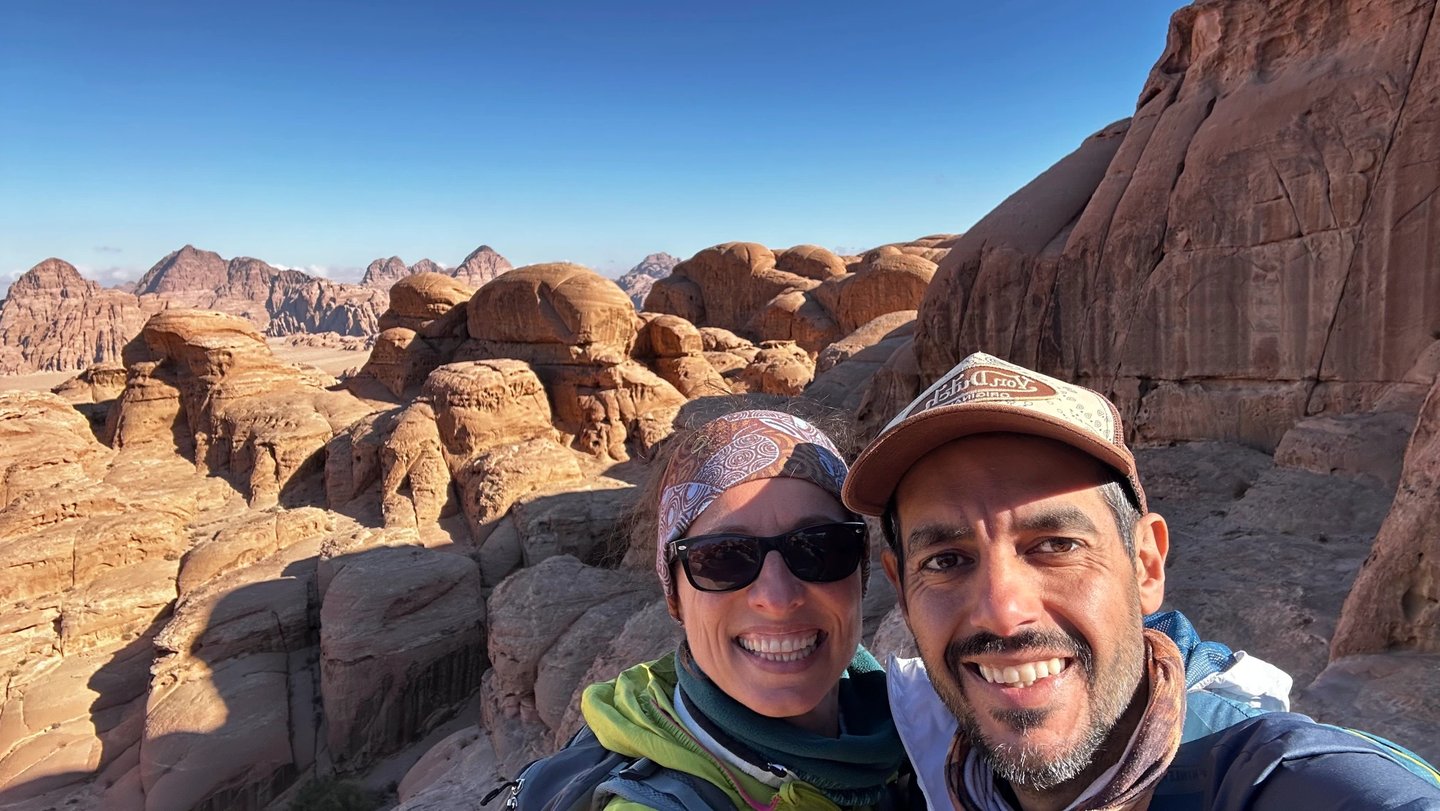
Spring is also one of our favourite times to visit Wadi Rum for adventures like rock climbing and mountain hikes. The temperature is just right: warm enough during the day, not too harsh under the sun, and pleasantly cooler at night.
We also think Petra is best visited in early spring, before the weather becomes too hot and sightseeing starts to feel much more tiring.
In summer, we usually avoid Wadi Rum and Aqaba altogether, because temperatures often go above 40°C and can be too intense for comfortable travel. Instead, we spend more time in water canyons, which are one of the best ways to cool down while still enjoying Jordan’s outdoors.
In winter, we especially enjoy going to the Dead Sea, because it is much warmer than Amman and often feels like a completely different climate. We also like heading south to Aqaba, where the warmth and sunshine make it easy to forget it is winter.
Best Overall Months to Visit Jordan:
For most travelers, the best overall months are March to May and September to November.
These shoulder seasons give you the best balance for:
(without dealing with extreme summer heat or winter cold).
Petra sightseeing
walking in Amman
hiking
visiting Wadi Rum
without dealing with extreme summer heat or winter cold.
Spring (March to May): Best Time for a First Trip:
Spring is usually the easiest and most comfortable season for a first visit to Jordan. Days are pleasantly warm, nights are cooler, and the north is greener than at most other times of the year.
Typical temperatures:
Daytime: 20–28°C
Night: 10–16°C
This is the season we recommend most for a mixed itinerary.
Summer (June to August): Plan Around the Heat
Summer in Jordan can be extremely hot, especially in Wadi Rum, Aqaba, the Dead Sea, and the Jordan Valley.
Petra at midday can feel brutal
Temperatures often exceed 35°C
Typical temperatures:
Daytime: 30–45°C
Night: around 23–30°C (desert nights can still feel cooler)
If you visit in summer, the strategy is simple: start early, take a long midday break, then go out again in the late afternoon.
Autumn (September to November): Second-Best All-Round Season:
Autumn is very similar to spring, with warm days and cooler evenings.
Typical temperatures:
Daytime: 20–30°C (especially September–October)
Cooler later in the season
This is one of the best times for a full Jordan itinerary.
Winter (December to February): Cold in Amman, Warm in the South:
Winter surprises many travelers.
Amman and the highlands can be very cold, rainy, windy, and sometimes even snowy.
Aqaba and the Dead Sea are much warmer and great for winter sun.
Typical temperatures:
Daytime: around 0–14°C depending on location
Nights feel significantly colder
Simple Logic (So You Don’t Overthink It):
Want comfortable weather for Petra, hiking, and sightseeing → go in spring or autumn.
Want warm sun in winter → go to the Dead Sea or Aqaba.
Visiting in summer → avoid midday and plan around the heat.
Common Question: Is It Cold in Wadi Rum at Night in Summer?
Yes.
Even in summer, desert temperatures drop at night, and evenings in Wadi Rum can feel much cooler than expected.
If you are staying overnight in Wadi Rum, bring:
a warm top or light jacket.
comfortable evening clothes.
layers, even in hot months.
What to Pack by Season (quick checklist)
Spring: light layers, a thin jacket for evenings, comfortable walking shoes.
Summer: breathable clothes, hat, sunscreen, something light for chill nights.
Autumn: long sleeve, layers for day/night temperature swings.
Winter: warm jacket, warm shoes, rain layer, warm jacket.
Jordan Entry Requirements for Tourists
Jordan Visa:
Most travelers entering Jordan will need a single-entry visa, which is usually easy to get on arrival at Amman Airport, and the standard visa costs 40 JOD.
After landing and following the signs through the airport, you will find the visa section on your right just before passport control.
Important:
Be careful with unofficial websites selling Jordan visas online at inflated prices. To avoid scams, it is usually safest to buy your visa directly at the airport on arrival.
Do children need a Jordan visa?
Yes. All travelers, including children and infants, need a Jordan visa, regardless of age. Even if a child does not need a Jordan Pass, the visa requirement still applies.
Nationalities that do not usually need a Jordan visa:
Jordan generally grants visa-free entry to citizens of GCC countries, including:
Saudi Arabia, United Arab Emirates, Qatar, Kuwait, Bahrain, Oman.
Jordan Pass:
The Jordan Pass is not the same thing as a visa, but for many travelers it is the smarter option.
It is a sightseeing pass that includes:
The Jordan entry visa.
Petra entry.
Entry to 40+ attractions across the country.
Once you buy it, you simply show it at included sites, where it is scanned at the entrance.
Very important:
Only buy the Jordan Pass from the official website. There are scam websites selling it for much more than the real price. We know this from personal experience — Karolina was once scammed when trying to buy one for her sister.
Is the Jordan Pass worth it?
In many cases, yes. For example:
Jordan visa = 40 JOD
Petra 1-day ticket = 50 JOD
Total payment = 90 JOD
But Jordan Pass including Petra entry= 70 JOD only!
So if Petra is part of your trip, the Jordan Pass can save you money very quickly. It also includes other attractions such as Jerash and Ajloun.
If Petra and other major paid sites are not part of your itinerary, then you may not need the Jordan Pass and can simply buy the visa on arrival.
Jordan Pass for children:
Children under 12 years old do not need a Jordan Pass. They can enter most tourist attractions in Jordan for free, including Petra.
So if your child is under 12, do not buy a Jordan Pass for them — it is usually unnecessary.

Jordanian Currency
The local currency in Jordan is the Jordanian Dinar (JOD), often written locally as JD.
The dinar is closely tied to the US dollar, so the USD/JOD rate is usually very stable, while the EUR and GBP rates move more from time to time. The Central Bank of Jordan’s latest published rates are roughly 1 USD = 0.708–0.710 JOD, 1 EUR = about 0.812–0.818 JOD, and 1 GBP = about 0.940–0.947 JOD, but you should always check the current rate before traveling.
What currency should you bring to Jordan?
We strongly recommend bringing US dollars, euros, or British pounds.
These are the easiest foreign currencies to exchange in Jordan and are widely accepted by exchange offices. Less common currencies, such as Polish złoty, Czech koruna, or Norwegian krone, are much harder to exchange and in many places may not be accepted at all.
Cash, cards, and ATMs
ATMs are widely available in Amman, major cities, and larger towns, and cards are accepted in many hotels, restaurants, and larger shops. But cash is still important, especially in local markets, smaller shops, taxis, and more remote areas.
Bargaining:
In markets and smaller independent shops, bargaining is common, especially in tourist areas. You do not need to negotiate aggressively, but it is completely normal to ask for a better price.
Language in Jordan
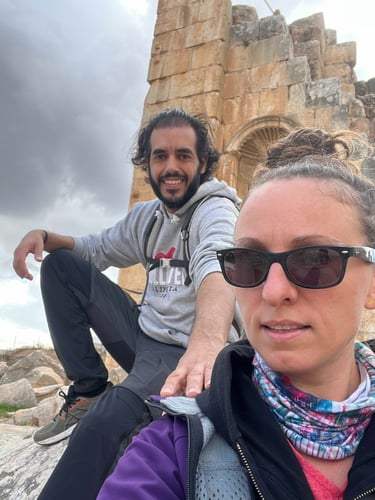
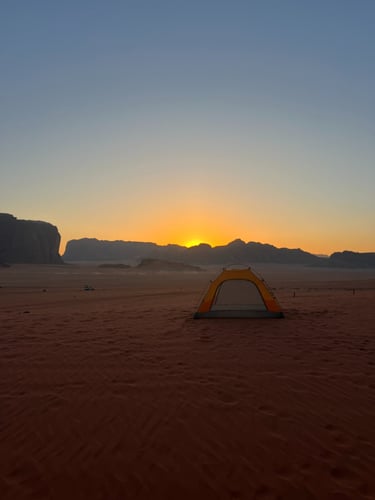
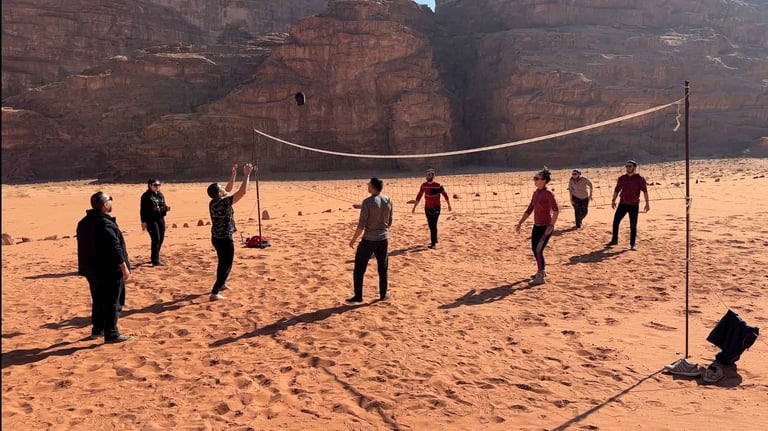
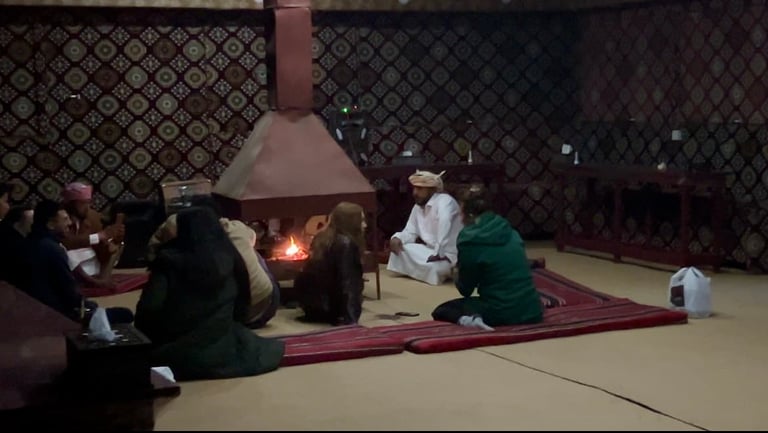
The first time I took Karolina to a camp in Wadi Rum, she was surprised by how easily the local Bedouins could hold full conversations in English. She expected that level of English mainly in Amman, not in the desert.
Another thing many visitors notice quickly is that in places like Petra, local kids and souvenir sellers often speak several words — or even full sales phrases — in different languages. It is not unusual to hear English, Spanish, French, German, or even Polish while walking through the site.
Arabic: Arabic is the official language of Jordan.
English: The good news for travelers is that English is widely spoken and understood, especially in:
tourist areas
hotels
restaurants
major cities
In many tourist places, people switch easily between Arabic and English, so communication is usually not a problem.
Useful Arabic words:
Marhaba — Hello
Law samaht — Please
Shukran — Thank you
SIM and eSIM Cards in Jordan
If you want mobile internet in Jordan, you have three main providers: Zain, Umniah, and Orange.
I personally use Zain as I live in Jordan, and I find it reliable, fairly priced, and easy to deal with. However, that does not automatically make it the best option for a tourist staying only a few days or a few weeks.
The offers below are based on what we found at the airport kiosks in the arrivals area, just before leaving the terminal. Prices and packages can change, so always double-check current offers when you arrive.
Zain: 22 GB for 14 JOD
Best for: travelers who want a reliable all-round option
Pros: good general coverage, strong reputation, and good customer service
Possible downside: more expensive than the other options
Umniah: 35 GB + 100 local minutes + 20 international minutes for 10 JOD
Validity: 10 days
Best for: budget travelers who want the most value
Pros: strong value, lots of data, useful local minutes, and international calls included
International minutes: mainly for countries in Europe, the UK, the USA, India, Brazil, Argentina, Mexico, Japan, China, South Korea, Australia, and others
Possible downside: coverage is generally weaker in some remote areas
Orange: 30 GB + 100 local minutes + 20 international minutes for 10 JOD
Best for: travelers who care most about coverage
Pros: often considered the strongest option for overall coverage, plus local and international minutes included
International minutes: mainly for countries in Europe — it is best to ask at the kiosk whether your country is included
Possible downside: not always the best value if price is your main priority
Which SIM should you choose?
Choose Orange if you want the best chance of staying connected throughout your trip.
Choose Umniah if you want the cheapest option with the most data.
Choose Zain if you want a reliable provider with good customer service.
For us personally, when we visit places like Petra or Wadi Rum, we do not really care about having signal all the time — we actually enjoy disconnecting a little. But if staying connected is important for your trip, Orange is usually the safer choice.
SIM or eSIM?
All three providers may offer both physical SIM cards and eSIM, depending on your phone and the package available at the time.
If your phone supports eSIM, it can be the more convenient option:
no need to swap SIM cards
easier for short trips
less plastic waste
We also like the fact that it creates less waste — and yes, every little bit matters.
Culture and Local Customs in Jordan
Jordan is a culturally conservative country, so showing basic respect for local customs goes a long way.
When visiting mosques or religious sites, it is best to dress modestly. This usually means covering your shoulders and wearing longer trousers, skirts, or dresses, while avoiding very revealing clothing. It is a simple sign of respect for the religious and cultural importance of these places.
At the same time, daily life in Jordan is not as strict as some visitors imagine. Many Jordanians, especially in cities, wear modern clothes, and many women choose to wear the hijab for religious reasons, while others do not.
In hotels, resorts, and private beach clubs, women commonly wear swimsuits and bikinis just as they would in many other countries. In more public places, modest clothing is usually the safer and more comfortable choice.
People in Jordan usually do not openly comment on a tourist’s outfit, but some staring can happen, especially outside the main tourist areas. Karolina personally feels more comfortable here wearing looser and longer clothes than she normally would in Europe.
Jordanians are generally very warm and welcoming toward visitors. People often start conversations, offer help, and show a lot of kindness, especially toward families traveling with children.
Get in touch


Home | Jordan | Blog | Services | About | Contact | Privacy Policy | Terms of Use | Refund & Payment Policy
© 2026 Travel Couple