
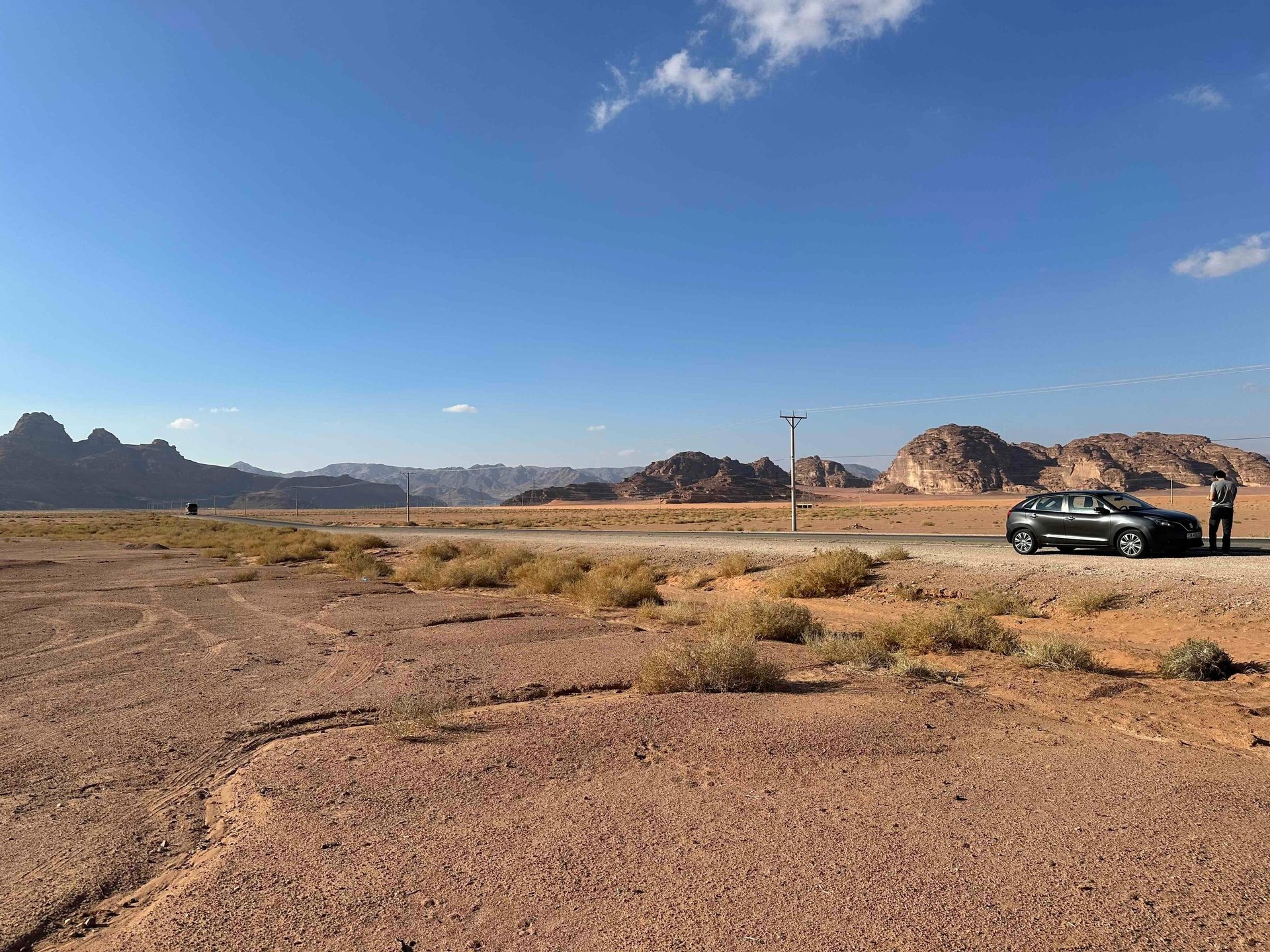
Renting a Car & Driving in Jordan (Essential Guide)
A local’s honest guide to driving in Jordan — Amman traffic, speed bumps, highways, checkpoints, and the rental tips that save you money and stress.
I was born and raised in Jordan. I learned to drive here. I’ve driven the Desert Highway more times than I can count, navigated Amman at rush hour before google maps even existed! And taken mountain roads down to the Dead Sea in the middle of summer. For me, driving in Jordan feels normal.
Karolina, my wife, grew up driving in Poland. Structured roads. Clear lane discipline. Predictable traffic behavior. Even after nearly five years together, and many trips across Jordan, she still refuses to drive here.
Not because she thinks it’s unsafe, but because the style of driving here feels unpredictable compared to what she’s used to in Europe.
That contrast is important, because if you’re visiting Jordan and wondering whether to rent a car, you’re probably somewhere between us.
So here’s what it is really like...
Jordan driving essentials:
You drive on the right-hand side.
The hardest driving is in Amman.
It's normal to be stopped police checkpoints.
It's worth it to check local rental cars provider.
The cheapest is to rent from Amman or Amman airport.
Is Driving in Jordan Safe?
Yes — but it’s active driving.
Jordan’s roads themselves are generally good. Major highways are paved and maintained. Road signs are usually in Arabic and English. Distances between destinations are reasonable. You’re never driving for endless hours.
What makes driving here feel different is not the infrastructure. It’s the rhythm!
Traffic in Jordan is fluid rather than rule-bound. Drivers are decisive. People merge quickly. Indicators are not always used. Roundabouts require confidence. Hesitation creates more problems than assertiveness.
If you’re waiting for the “perfect gap,” you may wait forever.
Karolina describes it as mentally demanding. Not because it’s dangerous — but because it requires constant awareness.
If you’re comfortable driving in places like Southern Italy, parts of Spain, or busy cities in Eastern Europe, you’ll adapt.
If you’ve only ever driven in quiet, highly structured traffic systems, the first hour in Amman may feel overwhelming.
But it is not chaos. It’s controlled unpredictability.


Do you really need to rent a car in Jordan?
It won’t be necessary for everyone, but for many travelers it becomes the difference between “I saw the highlights” and “I actually explored Jordan”.
Jordan is set up extremely well for road trips and small-group tours. It is not set up particularly well for independent travel on public transport.
There are no trains. There are buses and minibuses, but they often have limited departures, and only connections between main tourist sites. The schedules are set in a satisfying way but freedom of movement is always limited.
If you’re a solo traveller you can absolutely use buses and minibuses — just expect that you’ll need to plan more, wait more, and accept less spontaneity. For day trips, you may still rely on taxis or tours due to limited direct connections. You may check this most famous bus tour company in Jordan to get an idea about bus tours here.
If you’re visiting for only a handful of days and your itinerary is basically: Amman + Petra + Wadi Rum + Dead Sea, you can survive without renting a car. Multi-day tours and private drivers cover those routes every day. You’ll pay much more for convenience, but you’ll also avoid driving stress.
However, if you want independence, flexibility, to stop in places that aren’t on the standard bus tours circuit, or simply to move at your own pace, renting a car makes the most sense — especially for couples or small groups staying 4+ days.
A rental car often saves money too, just make sure to calculate the daily rate, fuel consumption, the insurance, deposit holds, and extra drivers if needed, If you understand those, the car becomes great value.


The driving distances are ideal
Road trips stop being fun when every day is only about covering long distances.
Jordan is different. A well-planned itinerary rarely forces you into exhausting “all-day driving” days. Most key routes are short enough that you can drive, explore, and still arrive with energy.
Typical drives (approximate, depending on traffic and route choice):
Amman → Jerash: 1 hour
Amman → Dead Sea: 1 hour
Petra (Wadi Musa) → Wadi Rum village: 1.45 hours
Aqaba → Petra: 2.5 hours
Amman → Petra: 3.5 hours
Amman → Aqaba: 4 hours
A local reality: Google Maps estimates can be optimistic once you factor in speed bumps, slower towns segments, police stops, and occasional stops. A good rule is to add a buffer — if Maps says 2 hours, plan as if it could be closer to 2h 30m.


What Is It Like Driving in Amman?
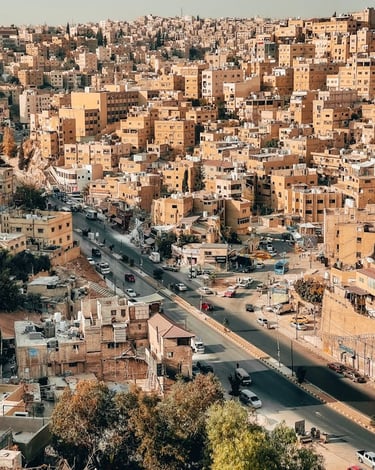
Amman is the hardest place to drive in Jordan.
The city is built on hills. Roads curve unexpectedly. Traffic is dense during peak hours. Parking can require patience and creativity.
Lane markings exist, but they are often treated as suggestions rather than strict boundaries.
You need to commit to your lane change. You need to move with the flow, not against it.
Once you leave Amman, driving becomes significantly easier.
Highways open up. Traffic thins. The experience becomes calm.
Many visitors assume all of Jordan feels like the capital, It doesn’t.


Speed bumps: they’re not a joke
If you only remember one thing from this guide, let it be this:
Jordan has an absurd number of speed bumps.
Some are clearly marked. Many aren’t. Some are faded into the road. They appear at the edges of towns (expected), near intersections and roundabouts (expected), and sometimes in places that feel completely random (less expected).
You can be on what feels like an open stretch of road and suddenly everyone brakes — that’s usually a speed bump you didn’t see.
Why does this matter? Because speed bumps create sudden braking and sudden braking creates stress — especially if the car behind is close. The safest approach is to anticipate them before you see them:
Slow down when you approach any cluster of buildings
Expect bumps near schools, roundabouts, intersections
Don’t follow too closely and don’t let anyone pressure you into speeding up
Avoid night driving if you can (bumps are harder to spot)
As a Jordanian driver, speed bumps are part of the landscape. For a visitor, they’re the thing that makes you swear the most.


Pick up your rental at Queen Alia Airport (in most cases)
Most visitors fly into Queen Alia International Airport (QAIA). For convenience, availability, and process consistency, it’s usually the best place to collect your car.
Multiple companies operate there.
Many desks are open late (some 24/7).
You can exit directly onto highways without driving through central Amman.
If you’re flying into Aqaba, renting there can also work, but availability is often lower and seasonal demand can be unpredictable.
One important point: Jordan is not a country where you want to “decide later” and pick up a rental spontaneously in a random town. If traveling in high season, book in advance.
Night arrival tip: if your flight lands after midnight and you’re tired, don’t plan your first drive to be a long one. Either stay near the airport area, or choose Madaba as an easy first base.


Watch for goats, camels, kids, and sand storms.
Driving in Jordan isn’t dangerous because people are “crazy”. It’s different because the road environment includes things you may not expect at home.
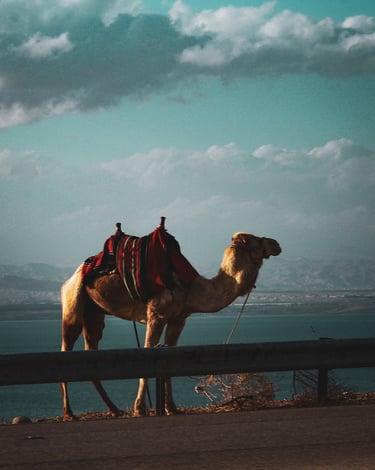
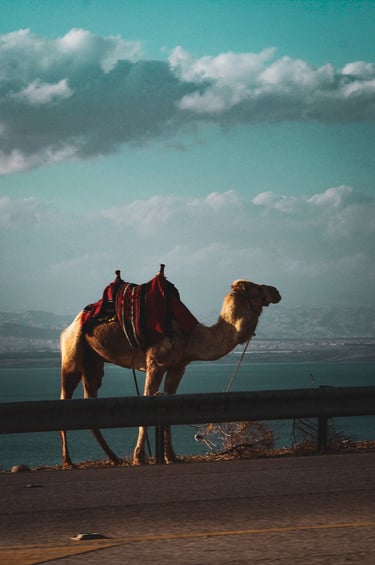
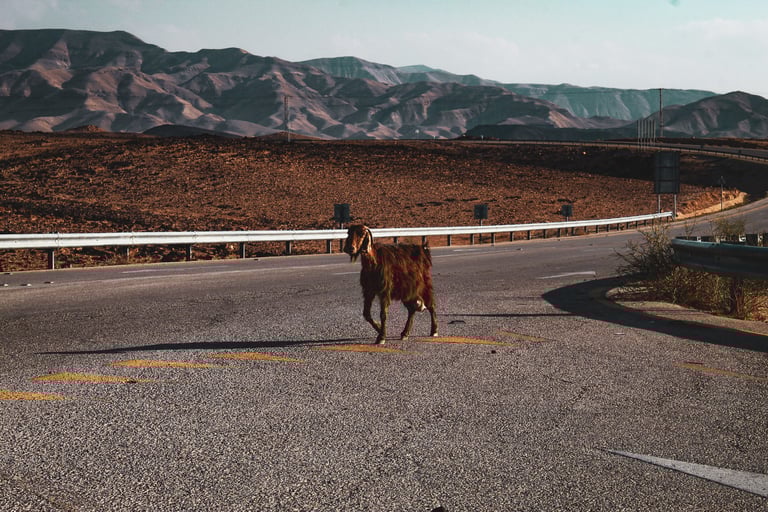
You might see goats being herded across a road, camels near desert routes, or animals wandering near villages. Slow down, use your hazard lights if needed, and wait until there’s a clear path. These animals matter to people’s livelihoods, and accidents can become complicated and dangerous.
Weather on the highway can change rapidly, sand storms block the driving vision completely and fatal accidents could happen, in case of sand storm, find a safe spot to park like a gas station until the storm is over.
A more common risk than animals is pedestrians, especially children in neighbourhoods. Sometimes they cross in ways that don’t match how a European road system works. You don’t need paranoia — you need awareness.
One important legal/real-life point: hitting a pedestrian can create serious legal consequences, and the driver is always treated as responsible. Drive conservatively near towns.

Most of your Jordan road trip will rely on three main north–south routes. Understanding them makes navigation far easier.
The Desert Highway (Highway 15)
Fast, direct, and the standard choice for Amman ↔ Petra/Wadi Rum ↔ Aqaba. It’s used heavily by trucks because Aqaba is Jordan’s main port. Some stretches can be rougher than others, so keep distance behind trucks and avoid aggressive passing.
The Jordan Valley / Dead Sea Highway (Route 65)
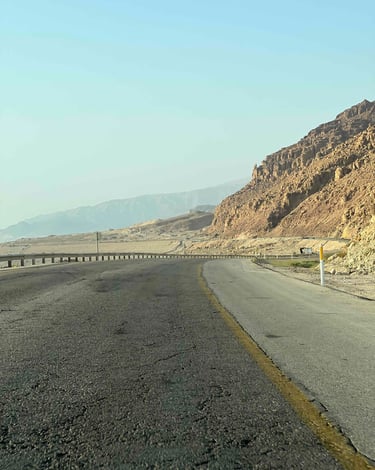
Runs along the valley corridor. Often quick, often in decent condition, and useful for Dead Sea access and valley travel. It can feel dramatically different in temperature and scenery from the highlands.
The King’s Highway (Highway 35)
The scenic, historic route — valleys, viewpoints, switchbacks, and real landscapes. It’s slower than you expect and best enjoyed when you have time to stop. If you try to “rush” it, you’ll just arrive late and tired.
Choose your highways carefully
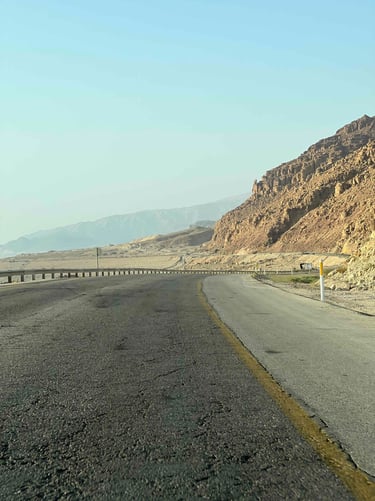

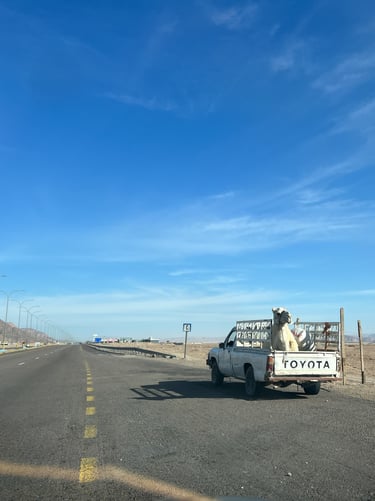
Jordan borders areas with serious political and security realities. Because of that, you’ll see a visible security presence in certain places, including checkpoints near tourist hubs, key junctions, and strategic roads.
For most visitors, checkpoints are routine:
sometimes you’re waved through.
sometimes you stop briefly.
occasionally you’re asked basic questions.
sometimes they look at your licence/rental paper.
They can look intimidating (uniforms, weapons, vehicles), but interactions are usually quick and polite. Slow down, wait for instruction, keep documents accessible, and stay calm.
Also: rental companies do not allow crossing borders with the car. Don’t try to be clever with border routes.
Police and army checkpoints: what to expect


n Jordan, attendants often fill the car for you. Card payment is common, but keep some cash as backup.
Confirm the correct fuel type for your rental. Jordan has two common petrol grades: 90 and 95. Make sure you know which one your rental company expects.
If you’re not confident with Arabic numbers, just show a 10 or 20 JOD note if paying cash. If paying by card, watch the pump display and stay nearby. Most of the time it’s straightforward.
Practical tip: fuel stations exist along highways, but don’t run low in remote stretches. Top up before long valley drives and before heading into areas with fewer services.
Fuel stations and filling up


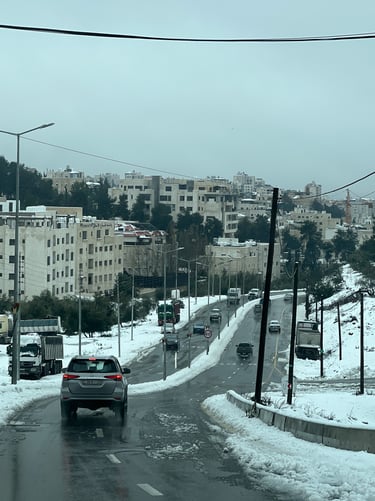
If you’re imagining constant horns and total disorder, that’s not most of Jordan.
Outside Amman, many visitors find driving surprisingly calm. People can be assertive, yes. Lane discipline can be flexible, yes. Tailgating happens sometimes, yes.
But for most of your road trip, it’s manageable and often enjoyable — especially when you’re driving through open landscapes.
The biggest adjustment is your mindset: don’t expect European predictability. Expect “flow”.
It’s usually not as chaotic as you think


After you get comfortable, you might be tempted to “drive like locals.” Don’t lean into the worst habits.
Your safest option is to stay conservative:
respect speed limits (even when they change often)
use indicators
slow down for towns, bumps, and checkpoints
watch for pedestrians/animals
keep distance and avoid aggressive passing
don’t drive tired
don’t drink and drive
Speed cameras exist, and police speed checks happen. Limits are 110 km/h on highways, lower on rural roads, and 40–60 km/h in built-up areas — but don’t treat these as guarantees, because signage matters.
You’ll also see hitchhikers along highways. Whether you stop is a personal safety decision; don’t feel pressure to do it.
Be a responsible driver (don’t copy the worst habits)
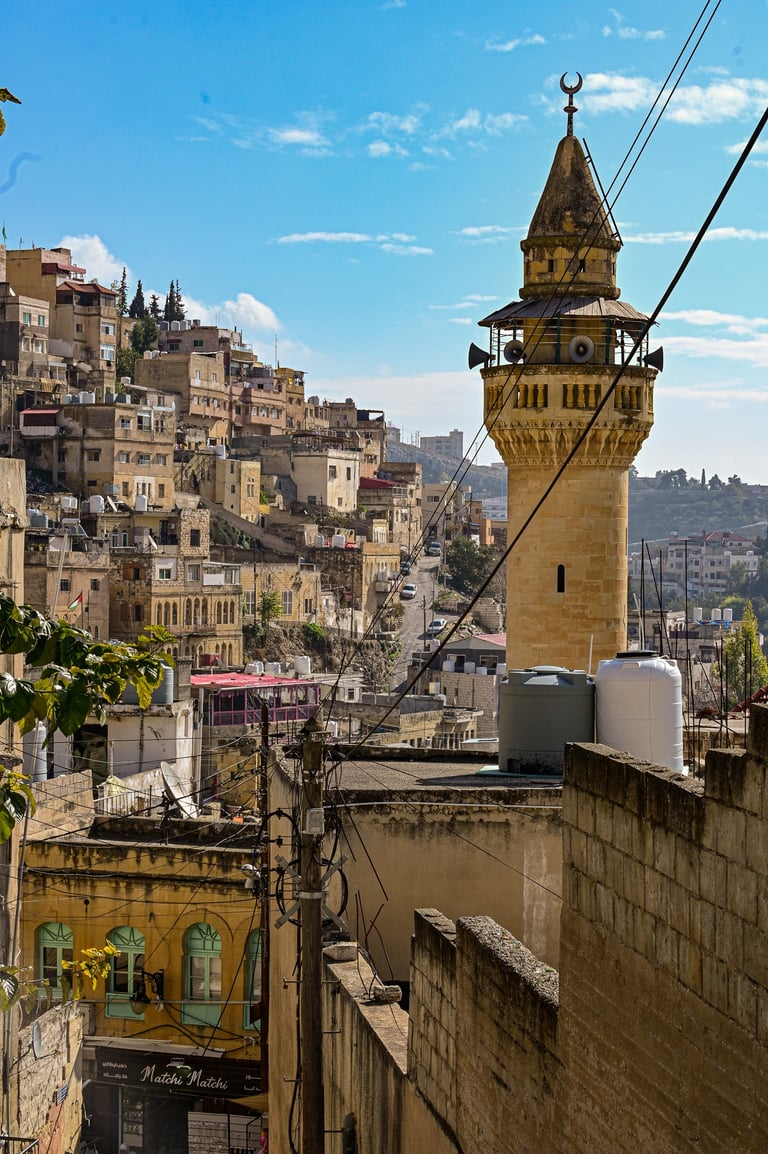
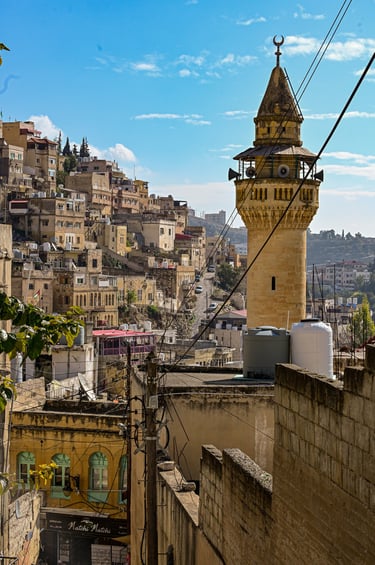


Many travelers worry: “What do I do with the car during Wadi Rum?”
Simple: you drive to the village/visitor area and park, then your camp arranges pickup (usually by 4x4). Don’t leave valuables in the car.
Trying to drive deep inside Wadi Rum in a normal rental is a bad idea. If you want to explore, use a Bedouin guide’s vehicle. You’ll avoid getting stuck, lost, or damaging the car.
Parking for Wadi Rum


In many areas, street parking is informal and often free unless signs indicate otherwise. In busy places you may find empty plot of land which turned to a paid car parking, usually it for 2 jods per day.
If your accommodation (especially in Amman old downtown) doesn’t have clear parking, message them ahead of time. Most hosts know exactly where guests should leave the car.
Parking in Jordan generally


For most visitors, renting a car in Jordan is straightforward — but only if you arrive with the right documents and the right expectations.
At a minimum, you’ll need a valid driving licence and you should have held it for at least one year. A passport will almost always be requested at the rental counter. Once you have the rental paperwork, keep it together and store it safely in the car, because you may need it at checkpoints or for any minor roadside situation.
Minimum age requirements can be inconsistent online. In practice, the most common minimum is 21, but some companies state 22 or apply stricter rules for younger drivers (often under 25), which is standard worldwide. If you’re near the minimum age, don’t gamble — read the small print and confirm before you travel.
Many nationalities are advised or required to carry an International Driving Permit (IDP). In real life, some rental desks never ask for it and others do. To avoid a stressful argument or last-minute rebooking, bring an IDP if your country issues it — you can’t reliably get one after arriving in Jordan.
Now the biggest misunderstanding: the credit card deposit. You must bring a credit card in the main driver’s name. Many tourists confuse the deposit with insurance. They are not the same thing.
The rental company will place a security deposit hold (a block / pre-authorisation) on your credit card. It’s not money they’ve “taken” in the normal sense — it’s money they reserve in case of damage, fuel issues, fines, or disputes. The deposit amount varies, but it can be substantial. It reduces your available credit limit and may take several working days to release after you return the car. If there is a legitimate charge (fuel, damage), it may be deducted before the hold is released.
Practical advice: bring a credit card with enough available limit, understand the deposit amount before booking, and check your statement later to ensure the hold has been released properly.
Bring the right documents & a credit card ready
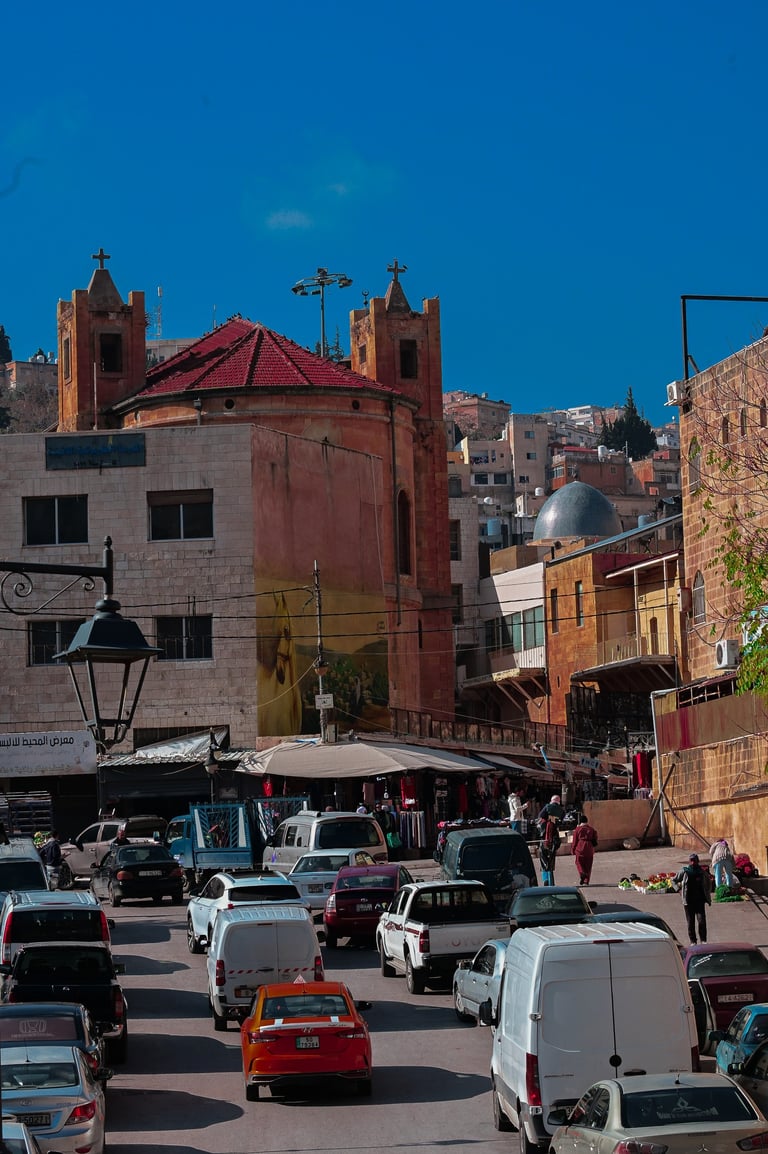

Mobile data in Jordan is generally fine in cities and on major highways, but it can be unreliable in a few places that visitors commonly drive to — especially around the Dead Sea, on parts of the way to water canyons (like Wadi Mujib and other rural canyon routes), and in more remote countryside/desert stretches.
To avoid getting stuck with “no signal” at the exact moment you need navigation, download offline maps before you set off:
Dead Sea area (including the roads down from Madaba/Amman and the resort zone)
Wadi Mujib / canyon routes and the surrounding roads
Rural/highway stretches between your main stops (especially if you plan scenic routes)
In Google Maps, search the region, tap your profile icon → Offline maps → Select your own map → download a large enough area to cover your driving route.
This is one of those simple steps that prevents unnecessary stress — and it helps you stay on track even if your internet drops mid-drive.
Download these area in your google maps
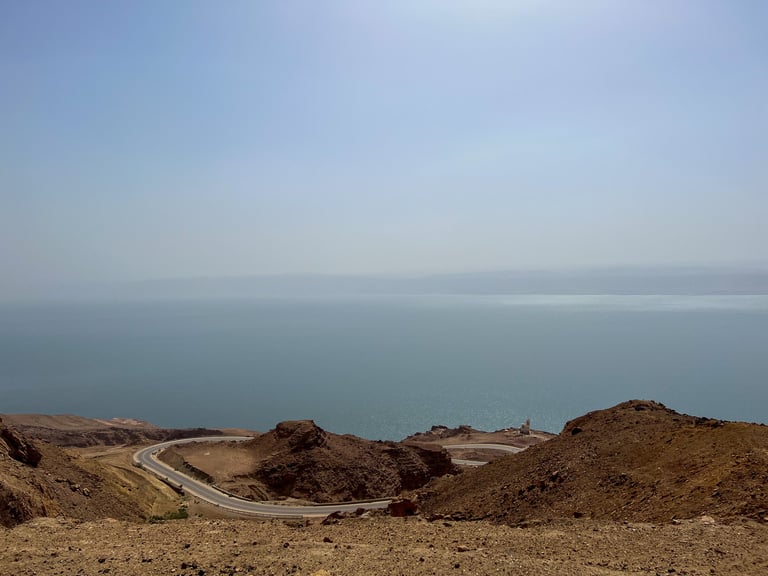

Jordan is one of the best places in the region to road trip — compact, accessible, and full of routes that turn “getting there” into the best part of the day.
But be honest about your driving personality.
If you’re adaptable and calm, you’ll likely enjoy the freedom and flexibility massively.
If you need strict predictability and low mental load (Karolina’s viewpoint), you may enjoy Jordan more with a driver or tours — and that’s a valid choice too.
Jordan isn’t “too scary to drive.”
It’s just different — and once you understand the difference, it becomes manageable.
Final note: should you do it?


If you’d rather avoid the typical international rental experience, we can connect you with a local car rental provider in Jordan we work with directly.
Why many travelers prefer this option:
Lower prices than most international rental companies
No extra insurance payments required
No deposit required
Airport pickup available
4x4 vehicles available
Cars are fully covered by insurance
24/7 support in case of breakdown or road issues
Vans and buses available for groups
Private drivers available if you prefer not to drive
Transparency: We earn a commission from the car rental provider only — you don’t pay us anything. Your rental terms and price are agreed directly with the provider.
If you want the contact number, message us with your dates, pickup location, and vehicle type, and we’ll connect you.
Need a Rental Car Without the Usual Hassle?
What to Read Next:
Local Guides in Jordan.
Accommodations in Jordan.
Dead Sea and canyons guide.
North of Jordan Guide
(Jerash + Ajloun + Umm Qais).

Get in touch


Home | Jordan | Blog | Services | About | Contact | Privacy Policy | Terms of Use | Refund & Payment Policy
© 2026 Travel Couple