
Petra Travel Guide: Everything You Need to Know Before Visiting the Rose-Red City
Explore Petra with our detailed, experience-based guide: routes, back trail from Little Petra, top sites, tips, costs, and everything you need for a perfect visit.
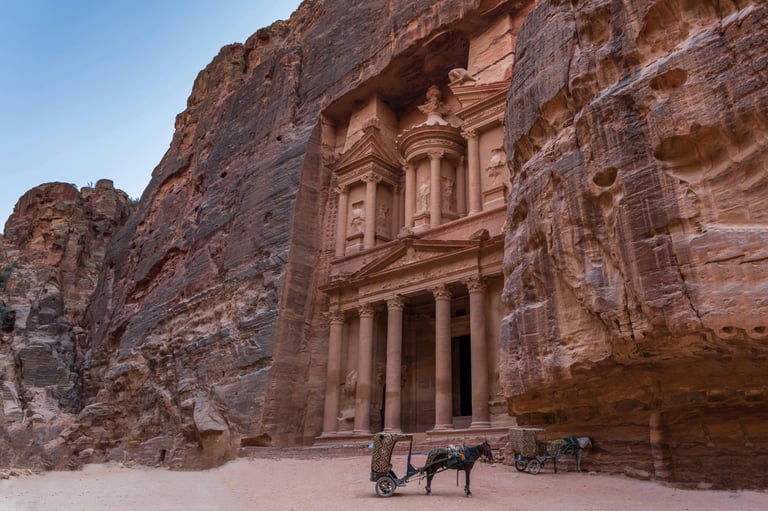
Petra Travel Guide — The Rose-Red City That Never Stops Surprising You
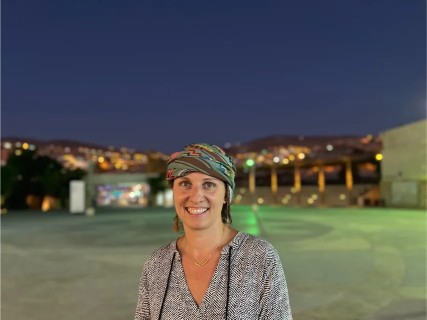
By Hamza & Karolina
Walking into Petra never feels the same twice.
Whether it’s your first visit or your fifth, that moment when the ancient sandstone walls begin to glow with morning light… it hits you again and again. Karolina and I have visited Petra multiple times, in different seasons, at different hours, taking different routes. And somehow, Petra always reveals something new — a hidden carving, a forgotten trail, a different shade of rose-red on the cliffs.
This guide blends everything we personally learned in Petra with the practical information travelers need. It’s long, honest, detailed, and written the way we wish someone had prepared us before our first visit.
A Short Story of Petra — Carved by Time, Imagined by the Nabataeans
Petra began as the capital of the Nabataean Kingdom more than 2,000 years ago. These desert merchants mastered water engineering in one of the driest places on earth, carving channels, dams, and cisterns that supplied an entire city. Their wealth came from the incense and spice trade routes that crossed Arabia toward the Mediterranean.
After earthquakes and shifting trade patterns, Petra was slowly abandoned, swallowed by the desert until a European explorer “rediscovered” it in 1812. Today it is a UNESCO World Heritage Site and one of the New Seven Wonders of the World — a title that becomes obvious the second you walk through the Siq and see the Treasury appear between the rocks.
How to Get to Petra
From Amman:
By car: 3 hours via the Desert Highway.
By bus (JETT): Usually one morning departure, returning late afternoon.
Fuel stops + rest areas: Plenty on the Desert Highway.
From Aqaba:About 1 hour and 45 minutes by car.
Taxis are available but expensive — renting a car is far more convenient.
From Wadi Rum:Around 1.5 hours by car, or bus.
Many Wadi Rum camps offer private transfers.
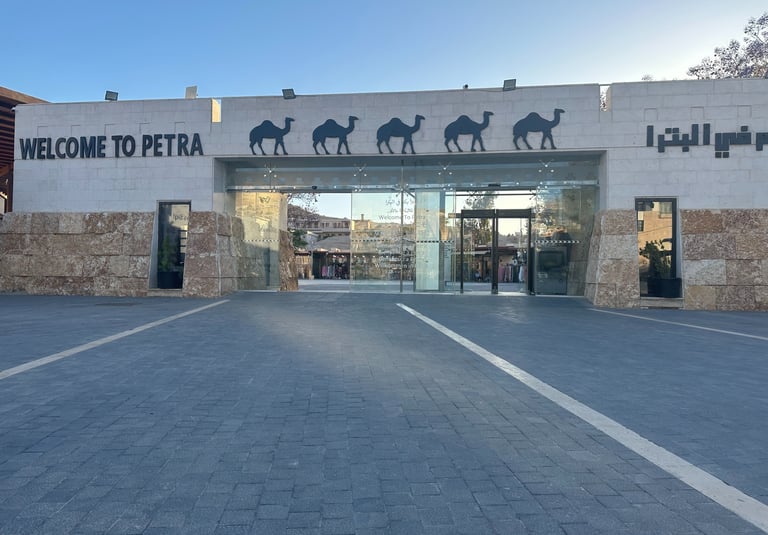
Parking & Entrance
The visitor center area in Wadi Musa has:
Paid and free parking areas.
Restaurants.
Bathrooms.
The starting point of all official routes.
Bring your passport and Jordan pass— they check it at the gate.
Tickets, Jordan Pass, and Jordan Explorer:
Jordan Pass:
If you’re visiting Jordan for the first time, Jordan Pass is the best value.
It includes:
Petra entry (1, 2, or 3-day options).
Visa fees waived.
Access to 40+ sites.
And here’s a very important detail from our own experience:
The free shuttle to Little Petra only works for Jordan Pass holders.
If you don’t have the Pass, you cannot board it even if you offer to pay.
Ticket Prices (approx):
1 day: 50 JOD
2 days: 55 JOD
3 days: 60 JOD
Petra by Night: 30 JOD
Jordan Explorer Pass:
If your plan is to explore Petra from the main gate and do the Little Petra back trail, we strongly recommend the Jordan Explorer (75 JOD) — it includes two entries, perfect for spreading Petra over two full days.
When to Visit Petra
The best months are:
March–May (spring)
September–November (autumn)
Summer is extremely hot, especially on long hikes. Winter mornings can be cold, but the light is incredible.
Best time of day
Sunrise: magical, quiet, soft golden light
Late afternoon: warm glow on the Treasury & Royal Tombs
Midday: harsh light but good for hiking deeper inside
If you’ve visited Petra before, you already know — the Siq looks completely different depending on the hour.
And then… the magical moment.
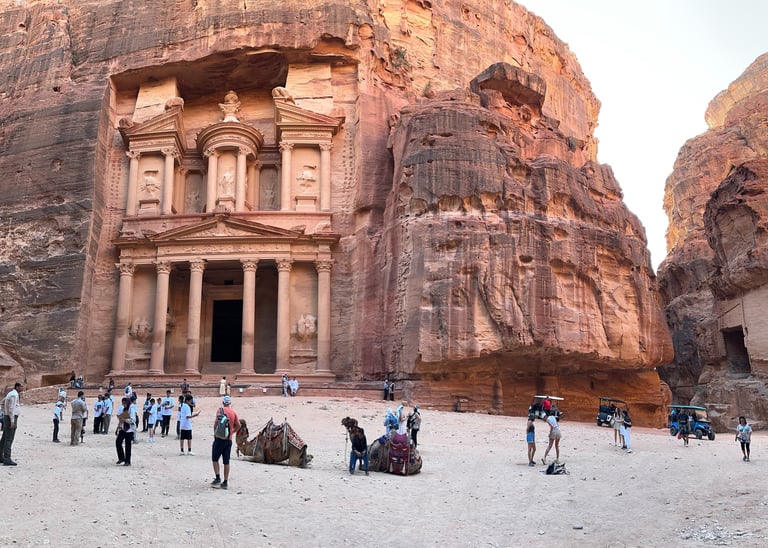
You turn a sharp corner, and the Treasury reveals itself through a slit of light — a surprise that gives goosebumps every time. No matter how many photos you’ve seen, nothing prepares you for that view.
Pros:
The famous “Treasury reveal” moment
Easy, wide path
Best for first-time visitors
Cons:
You walk the Siq twice
Crowded between 9 AM and 2 PM
How it works:
From the visitor center, a free shuttle takes Jordan Pass holders only to Little Petra.
If you don’t have a Jordan Pass:
Taxi is the only option if you dont have a car yourself.
From Little Petra, you walk through the narrow Siq al-Barid, past ancient frescoes and carved rooms.
A few years ago, Jeep transfers used to continue deeper into the mountains, but now all motorized traffic is prohibited.
The driver will drop you at the allowed point.
From there:
The hike takes 2–3 hours
Mostly uphill but manageable and not difficult.
Stunning desert views
Silence — only the sound of your footsteps and wind
A complete storyteller’s guide to Petra, based on our real visits — including the Little Petra back trail, must-see sites, tips, costs, and the best routes.
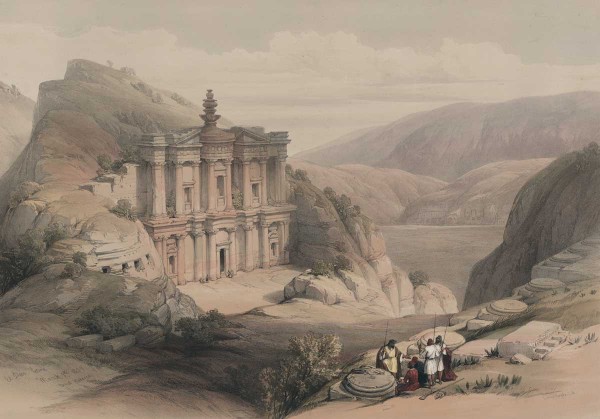
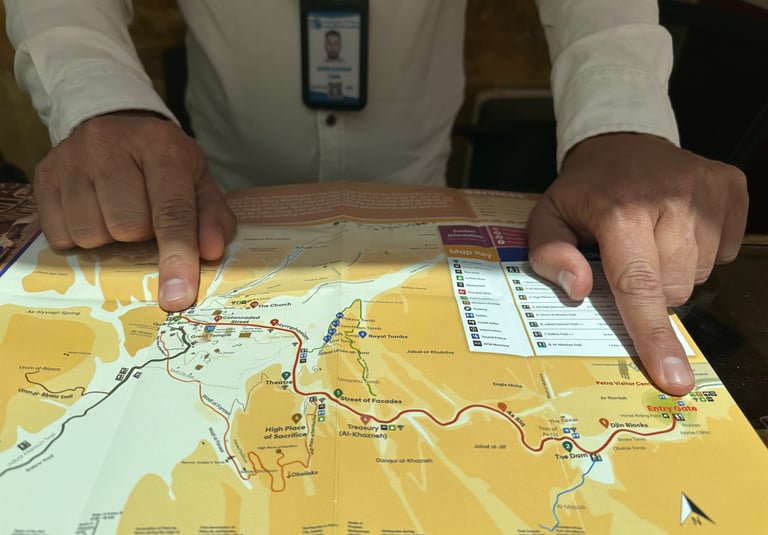
Route 2: Little Petra → Back Trail → Monastery → Main Petra
This is the adventure route we love — and we’ve done it ourselves.
Sightseeing Routes in Petra — Our Honest Experience
Petra is huge. Most people underestimate its size. That’s why choosing the right route matters, especially if you're visiting only once.
Here are the two main routes — and we’ve personally done both.
Route 1 — Main Entrance → The Siq → The Treasury (1.2 km):
This is the classic route most travelers take.
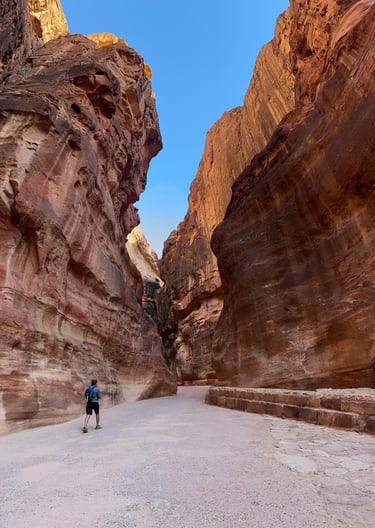
You start at the visitor center, pass the Djinn Blocks, walk along the carved canyon, and slowly the walls begin to tighten and rise.
The Siq itself is an attraction: narrow passages, ancient channels cut into the stone, colors shifting from pink to orange.
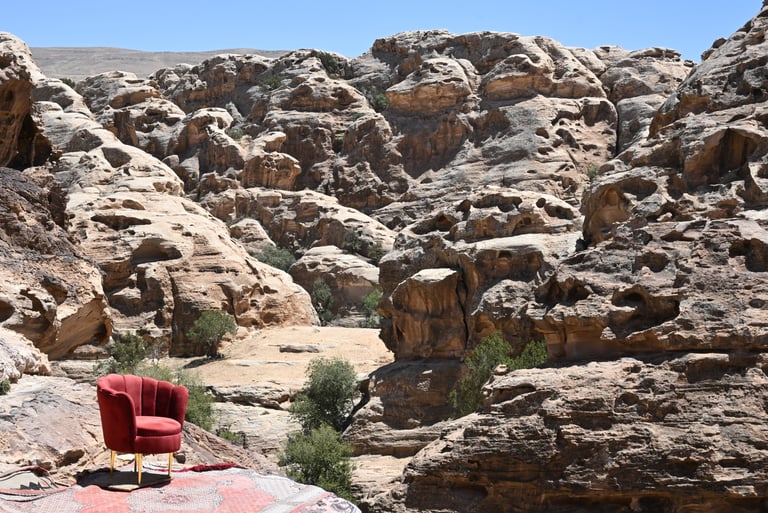
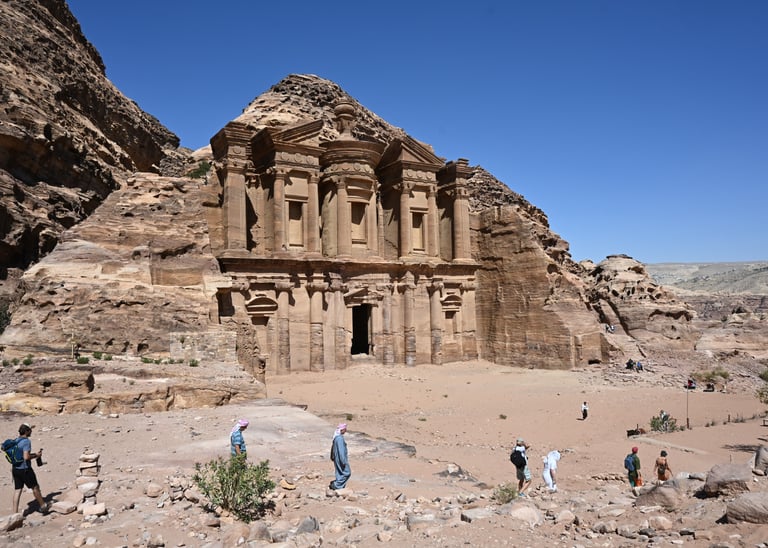
You finally reach the Monastery from above, and this moment feels like discovering Petra’s secret rooftop.
The Monastery is bigger than the Treasury, and arriving from the back makes you feel like you earned it.
Then you descend the staircase trail into the heart of Petra.
This route allows you to see:
Monastery → Great Temple → Street of Facades → Theatre → Treasury
in one long, unforgettable journey.
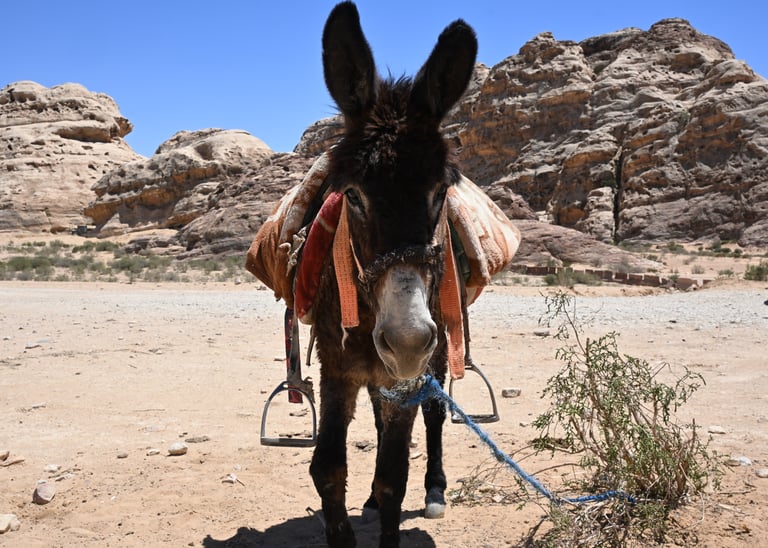
Should you use donkeys/horses?
We don’t recommend it for ethical reasons, but locals offer rides for about 5 JOD.
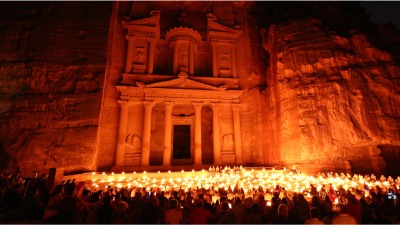
Petra by Night — Worth It or Not?
Held Sunday to Thursday, starting 8:30 PM, costing 30 JOD (children under 10 are free).
You walk through the Siq lit by candles until you reach the Treasury, where a traditional Bedouin performance takes place under a sky full of stars.
It’s atmospheric and beautiful — but crowded.
We recommend it only if you haven’t seen the Treasury at night before.
High Place of Sacrifice:
A 25 minute stair climb each way, offering panoramic views of Petra.
What to See in Petra (Detailed Guide)
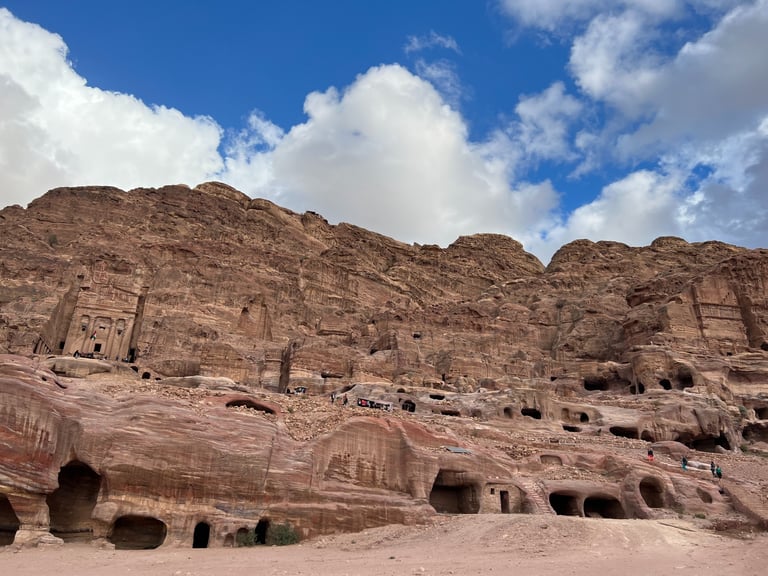
Street of Facades:
A long row of tombs carved into the cliffs, each with unique decorations and shapes.
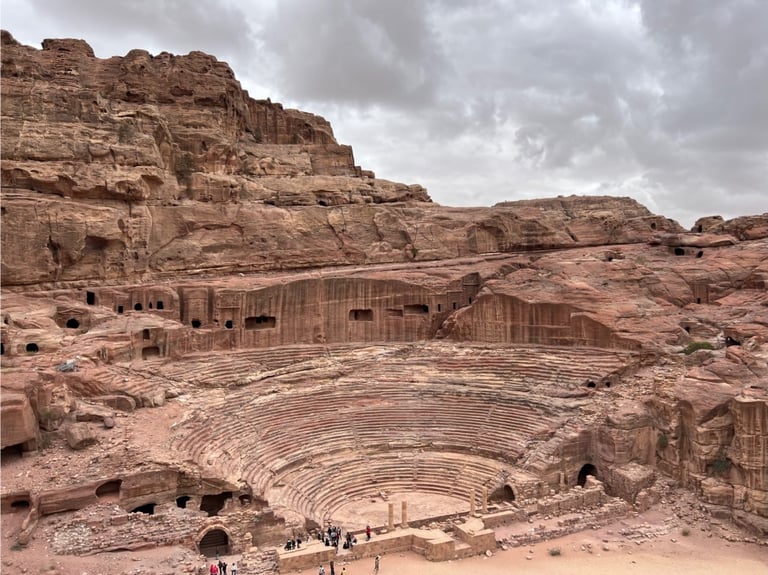
Nabataean Theater:
Carved entirely from rock, seating up to 7,000 people.
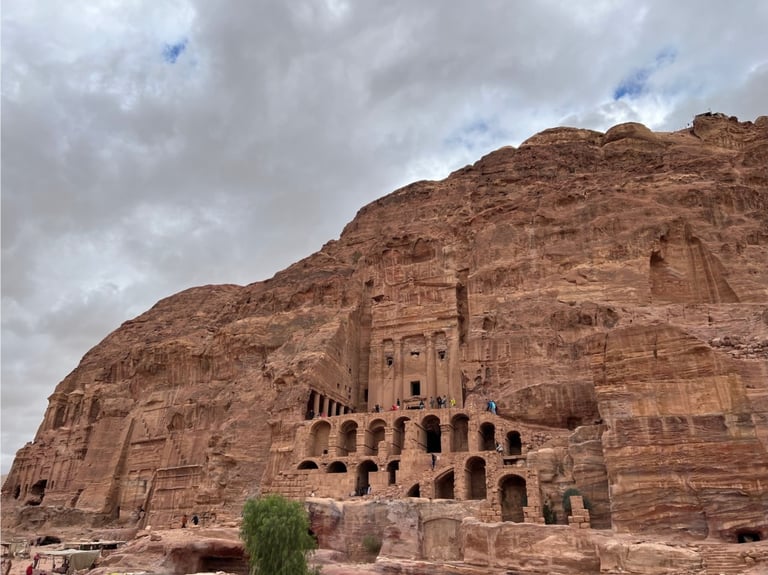
Royal Tombs (must-see):
Includes:
Urn Tomb
Silk Tomb
Palace Tomb
Corinthian Tomb
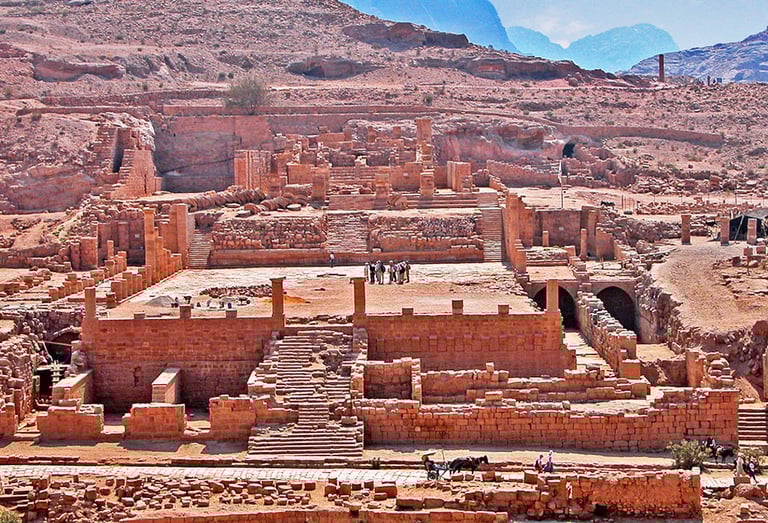
The Great Temple:
Ruins of a ceremonial complex with stairs, columns, and courtyards.
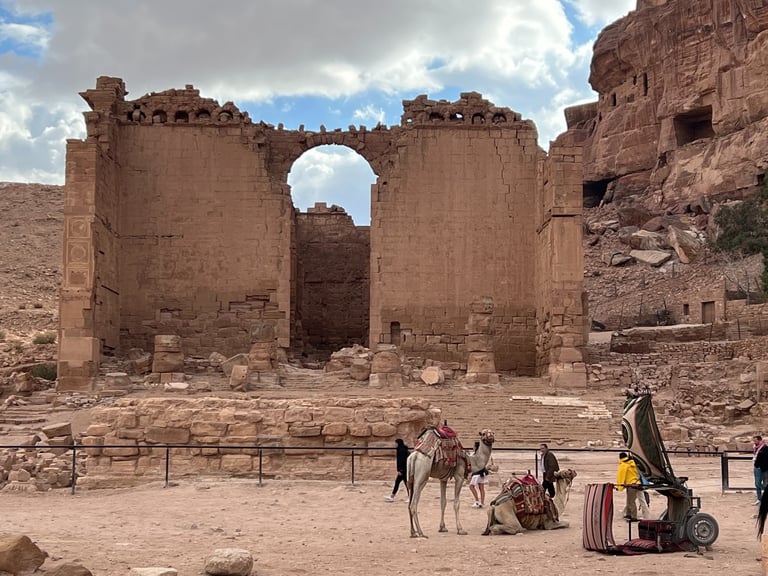
Qasr al-Bint:
A standing Nabataean temple at the end of the Colonnaded Street.
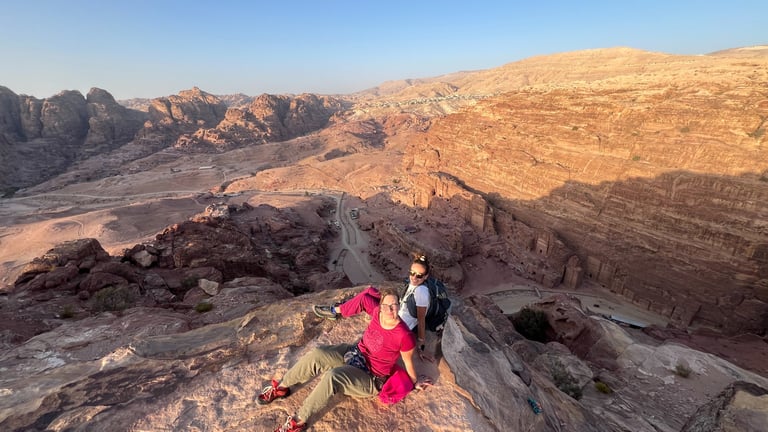
Petra Hiking Trails (We’ve Done):
Main Trail:
Easy, wide, connects the Treasury to Qasr al-Bint.
Ad-Deir (Monastery) Trail:
800 stairs, intense but rewarding.
High Place of Sacrifice Trail:
A beautiful up and down stairs trail with dramatic views.
Little Petra Back Trail (our favorite):
Quiet, scenic, and feels like an expedition.
Amenities & Services Inside Petra
Club Car
15 JOD one way
25 JOD round trip
Runs between the entrance and Qasr al-Bint
Animal Rides
Available but not recommended.
Donkeys, camels, and horses are often overworked.
Guides
Local guides are available at the visitor center.
Polish-speaking guides not available.
Prices start around 50 JOD for 2.5 hours.
Where to Stay in Wadi Musa
Options range from:
Budget hostels.
Mid-range hotels.
Panorama rooms.
Cave-style guesthouses.
Practical Tips for Visiting Petra
Wear proper hiking shoes.
Bring 1.5–2L water per person.
Sunscreen + hat.
Start early to avoid crowds.
Don’t rely on drone photography (drones not allowed).
Toilets available near major sites.
ATMs available at the entrance.
Cash helps for buying snacks and tea inside Petra.
Photography Tips From Our Own Experience:
Treasury best light: early morning or late afternoon.
Monastery: mid-afternoon.
Landscape shots: golden hour.
Avoid harsh light inside canyons.
Carry a small power bank.
If you have a drone: keep it packed (illegal in Petra).
FAQ's:
Is Petra safe?
Yes, extremely safe and well-organized.
How long do you need in Petra?
At least one full day; two days if you want to see everything.
Is the back trail difficult?
Moderate — uphill but manageable. (No exposed edges)
Can you visit Petra without a guide?
Absolutely — trails are clearly marked.
Conclusion — Petra Is a Place You Feel, Not Just See:
Petra isn’t just a historical site.
It’s a journey — through cliffs, silence, ancient carvings, and stories shaped by wind. Each time we visit, we feel something new. Maybe it’s the quiet of Little Petra at sunrise, or the way the Monastery dominates the mountains, or the surprise of standing before the Treasury after hours of walking.
Petra stays with you — and once you experience it, you understand why.
Get in touch


Home | Jordan | Blog | Services | About | Contact | Privacy Policy | Terms of Use | Refund & Payment Policy
© 2026 Travel Couple